
Pipeline & programs
We are developing in vivo genetic medicines that uniquely treat hematologic diseases by directing a clinically established modality against validated targets in the bone marrow.
MAR-101: Targeting the root cause of red blood cell diseases
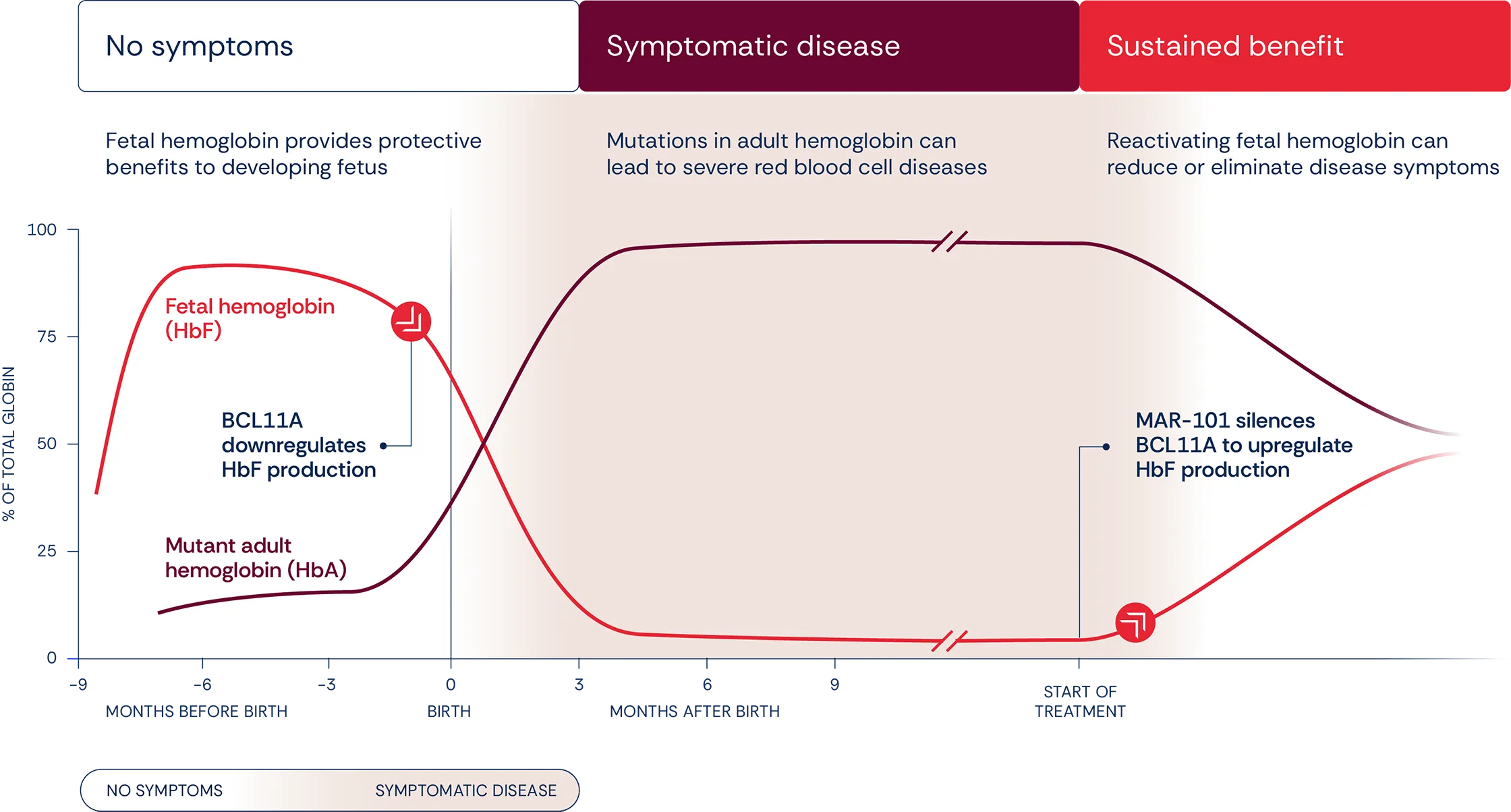
Our lead program, MAR-101, is designed to address the genetic underpinnings of sickle cell disease (SCD) and beta thalassemia, two severe blood disorders caused by mutations in the adult hemoglobin gene. Human genetics as well as decades of research have shown that reactivating fetal hemoglobin (HbF), the form of hemoglobin expressed at birth, can dramatically reduce or even prevent disease symptoms.
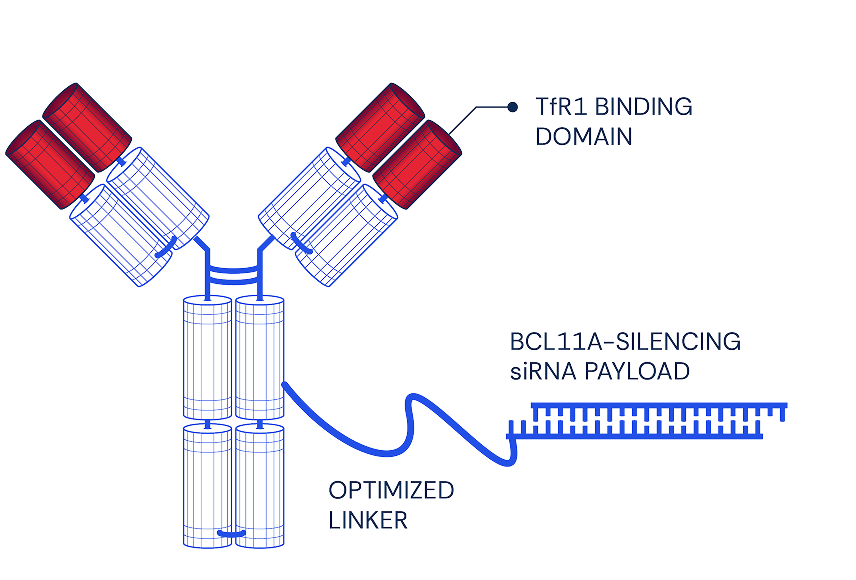
We are developing a novel antibody bioconjugate to silence the master regulator BCL11A and reactivate HbF production. Capitalizing on high transferrin receptor 1 (TfR1) expression in the bone marrow, the antibody component of MAR-101 precisely delivers a potent and specific BCL11A-silencing oligonucleotide payload to red blood cell precursors (erythroid progenitors). This results in restoration of HbF production, and potentially a durable, disease-modifying therapy for patients living with these life-threatening disorders.
MAR-101 is designed to modify underlying disease biology


It is estimated that over 7.7 million people worldwide have sickle cell disease and over 100 million people carry the sickle cell genetic variant.
Source: World Health Organization and American Society of HematologySickle cell disease
Sickle cell disease (SCD) is an inherited blood disorder that transforms healthy, flexible red blood cells into fragile, sticky crescents. These “sickled” blood cells block blood vessels and deprive tissues of oxygen, triggering severe pain crises and progressive organ damage. People with the condition describe feeling as if they have broken glass shards inside their bodies during these attacks. Although the genetic cause of SCD was identified in 1949, millions of patients worldwide still lack effective treatment options.
Reactivating HbF production in the bone marrow can dramatically reduce or even eliminate SCD crises and increase oxygenation of red blood cells. By selectively suppressing BCL11A in red blood cell precursors, we aim to unlock durable HbF production and address the genetic root cause of this debilitating disease.
Thalassemias, which include beta thalassemia, are one of the most common hereditary blood disorders, with 300 million people around the world carrying a copy of the abnormal gene.
Source: Boston Children's HospitalBeta thalassemia
In the inherited blood disorder beta thalassemia, patients have mutations in the beta hemoglobin gene that prevent them from making sufficient healthy hemoglobin, which is essential for red blood cells to carry oxygen. A lack of healthy red blood cells can lead to anemia, causing fatigue or weakness, and can also affect the bones, heart and liver and ultimately reduce life expectancy.
Fetal hemoglobin (HbF) can substitute for the defective beta globin and help restore red blood cell function. We are developing in vivo genetic medicines with the goal of reactivating HbF more safely and effectively than available options.
Learn about our commitment to patients
Patients and Caregivers